
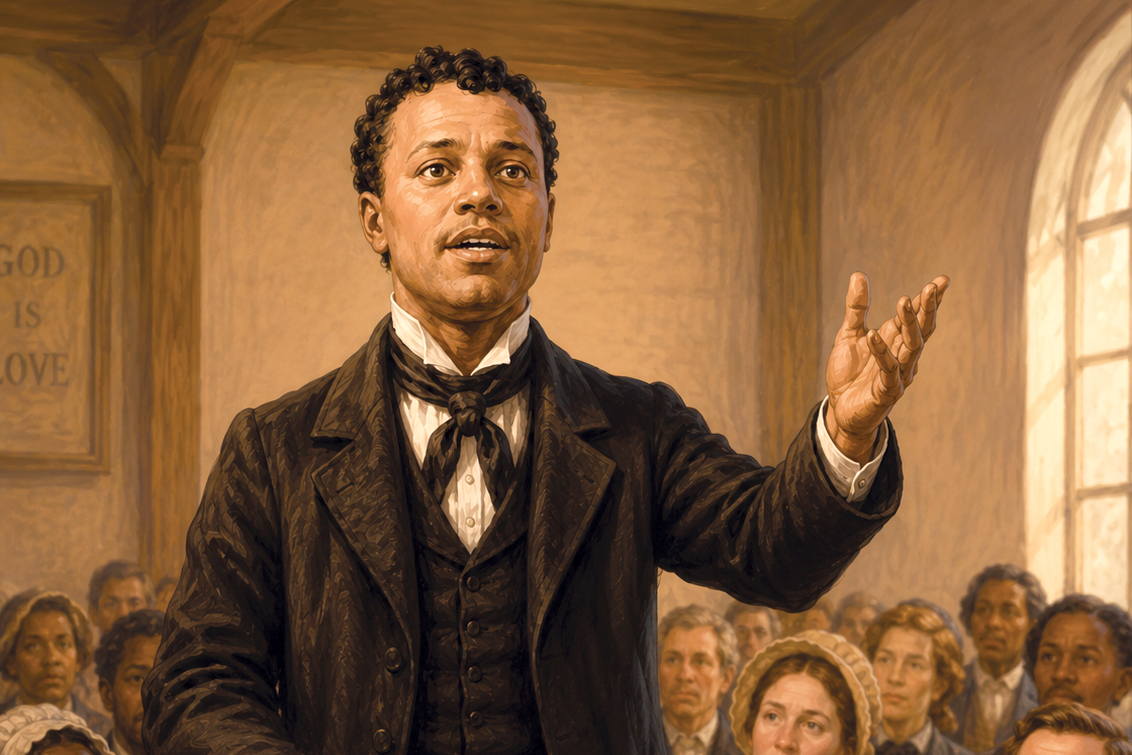
William Foy, a Brave Messenger for Jesus
by Anna Galeniece
William, what did you see?” the Advent believer asked eagerly. William’s eyes filled with wonder. “I saw angels, heaven, and Jesus coming soon,” he said softly. “It was more beautiful than I can describe.” The man leaned closer, hardly able to wait for more.
At the beginning of the 1840s, when many people were eagerly awaiting Jesus’ soon return, there lived a kind young man named William Foy. William was a Free Will Baptist who loved the Lord wholeheartedly and wanted everyone else to know about Jesus too.
One day something very unusual happened to William. God started to give him special visions. Imagine seeing pictures of heaven so real they felt almost alive! William saw angels, the beautiful New Jerusalem, and happy people living forever with Jesus. The visions filled him with hope and joy, and he could hardly wait to tell others what he had seen.
Before long, William saw another vision, after which he began traveling from one town to another in New England. Everywhere he went crowds gathered to hear him speak. People listened quietly as William described God’s judgment, Christ’s second coming, beautiful heaven, and the gentle love of Jesus. And when he talked about how much Jesus cared for people, many in the crowd were deeply touched.
However, life was not always easy for William. Some people treated him badly because he was Black. Others made fun of him because he believed Jesus would return soon. But William didn’t quit. He kept trusting God and sharing the messages from his visions.
As William continued traveling and preaching, his visions were printed in a small brochure so even more people could read them. Thousands heard about his experiences and were inspired by his courage, faith, and love for Jesus.
During one of William’s meetings in Portland, Maine, young Ellen Harmon (White after her marriage) was sitting beside William’s wife, Ann, while he preached. Ellen noticed that Ann knew William’s messages so well that she quietly mouthed the words as he spoke! Sometimes William saw Ann’s mouth moving and got distracted, so she quickly hid her face whenever he looked her way. You can almost picture William and Ann laughing about it together once they were back home.
Soon after Ellen received her first vision in December 1844, she shared it during a gathering near Cape Elizabeth, Maine. William attended that meeting and listened closely. “The Lord is guiding you, Ellen,” he whispered. Her vision sounded like his own, and he was filled with excitement. During her story he jumped to his feet, shouted with joy, and praised the Lord! Believing God was leading her, too, William gladly encouraged Ellen.
William Foy shared messages from God during the years leading up to the Great Disappointment of 1844. God gave him a special job to help people focus on Him and be ready for what was ahead. After the Great Disappointment, Ellen White encouraged and guided believers for 70 years. Even though they had different roles, both trusted God and faithfully shared the messages He gave them.